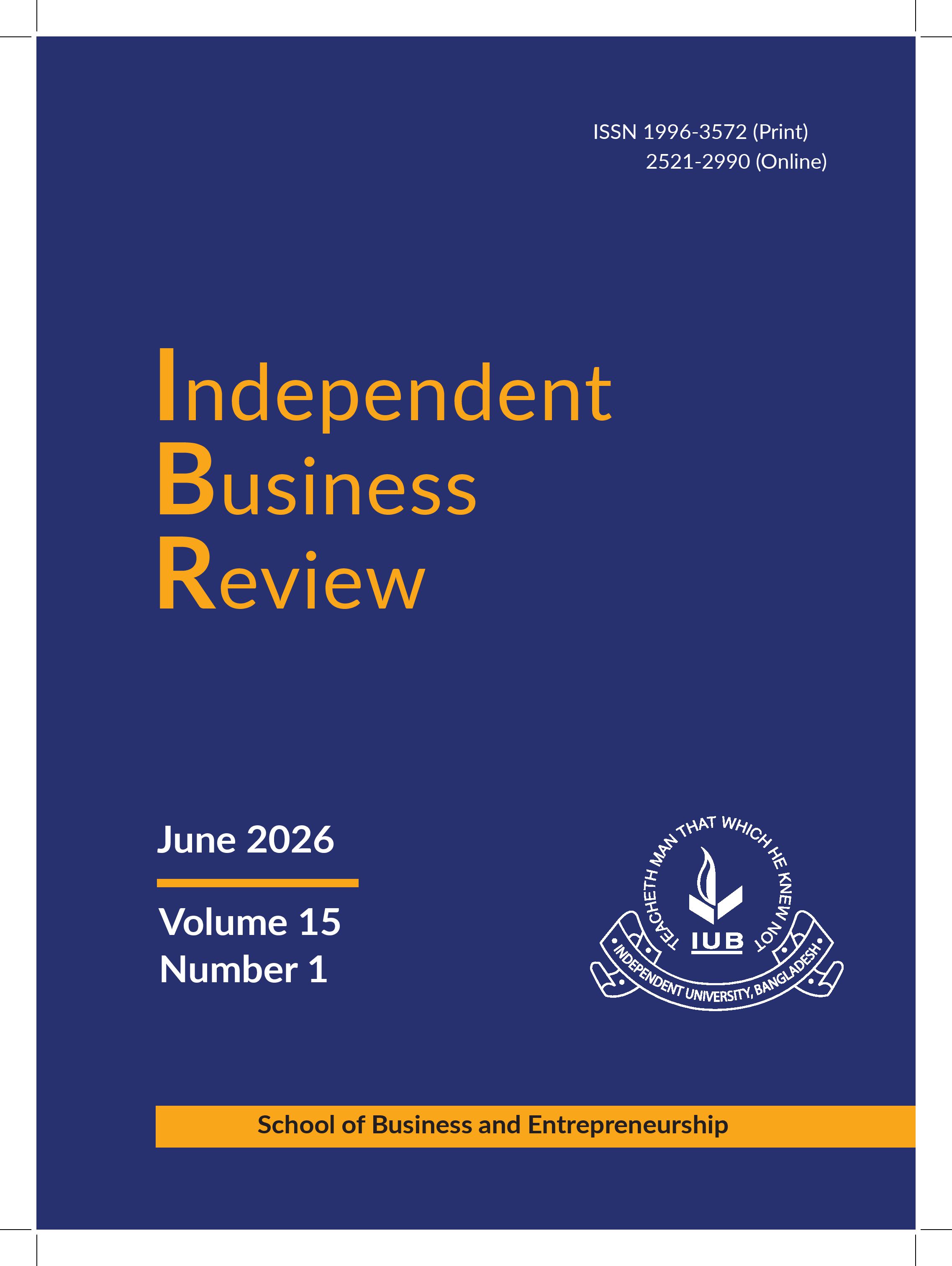
Barriers to Green Startups in Bangladesh
Keywords:
Green startups; sustainable entrepreneurship; Bangladesh; green finance; circular economyAbstract
This study examines the barriers that constrain green startups in Bangladesh and
explains why formal sustainability policies have not translated into accessible support
for early-stage entrepreneurs. Using an exploratory mixed-methods design, the study
combines a structured entrepreneur survey, interviews with green business founders, and
secondary evidence from policy documents and academic literature. The findings indicate
that green startups face four interconnected barriers: limited access to appropriate
financing, weak startup-oriented institutional support, moderate confidence in intellectual
property protection, and low market acceptance due to price-sensitive consumer behavior.
This paper argues that the main problem is not a lack of policy but a policy-practice gap
that prevents small ventures from using available instruments. It recommends targeted
equipment finance, climate-focused incubation, stronger regulatory coordination, green
product certification, and consumer awareness programs to improve the sustainability
oriented entrepreneurial ecosystem in Bangladesh.
References
Bangladesh Bank. (2020). Sustainable Finance Policy for Banks and Financial Institutions. Dhaka:
Bangladesh Bank.
Government of Bangladesh. (2023). Bangladesh Patent Act, 2023. Dhaka: Government of the
People’s Republic of Bangladesh.
LightCastle Partners. (2024). Circular financing in Bangladesh: Policy barriers. Retrieved from
https://lightcastlepartners.com
Ministry of Environment and Forests. (2010). National 3R strategy for waste management. Dhaka:Government of the People’s Republic of Bangladesh.
Uddin, B. (2021). Consumers’ purchase behavior in Bangladesh: Green products perspectives.
Journal of Sustainable Tourism and Entrepreneurship, 1(4), 305-318. https://doi.org/10.35912/joste.
v1i4.475
United Nations Development Program. (2025). UNDP and FBCCI-IRC empower green startups to
drive the circular economy transition. Retrieved from https://www.undp.org/bangladesh
World Bank. (2024). Extended producer responsibility for advancing circular economies for plastics
in Bangladesh. Washington, DC: World Bank.
World Economic Forum. (2025). Why unlocking finance is essential for Bangladesh’s green energy
transition. Retrieved from https://www.weforum.org
Published
Issue
Section
License
This work is licensed under a Creative Commons Attribution-NonCommercial-NoDerivatives 4.0 International License.
IBR contents are under the terms of the Creative Commons Attribution License. This permits anyone to copy, distribute, transmit and adapt the work non-commercially provided the original work and source is appropriately cited.